Quick answer: Facebook ads work for contractors when you treat them as a way to get in front of homeowners before they need you, not as a replacement for Google. Run a simple lead campaign with real job photos or short videos, a clear offer, a short form with one or two qualifying questions, and call every lead back within minutes. WordStream's 2025 benchmarks put the median cost per lead for home and home improvement Facebook lead campaigns at $41.26.
Here's the honest truth about Facebook ads for home service contractors. Nobody scrolls Facebook looking for a roofer. That's the problem. It's also the opportunity.
Google catches people who already have a leak. Facebook reaches the homeowner who has been staring at a curling shingle for two years and hasn't called anyone yet. Get in front of that person with the right ad, and you're the first name they think of.
This guide is for roofers, HVAC companies, plumbers, tree services, remodelers, cleaning companies, and every other trade thinking about Facebook ads (or already running them and wondering where the money went).
Facebook ads vs Google: different jobs
Before you spend a dollar, get clear on what Facebook is for.
•Google answers demand. Someone types "AC repair near me." They want help now.
•Facebook and Instagram create demand. You interrupt someone's scroll and give them a reason to think about their roof, their furnace, or that dead oak leaning toward the garage.
That means Facebook leads are usually earlier in the buying process. They need faster follow-up and more nurturing. Contractors who expect Facebook leads to behave like Google leads get frustrated and quit. Contractors who build a follow-up system around them do well.
If you're still deciding where your first ad dollars should go, read Google Ads vs SEO for roofers first. Facebook is usually the second channel, not the first.
What Facebook leads cost
WordStream's 2025 Facebook ads benchmarks looked at 726 US lead campaigns that ran between April 2024 and June 2025. For the home and home improvement category, the medians were:
•Cost per lead: $41.26
•Cost per click: $2.23
•Click-through rate: 1.94%
•Conversion rate: 5.22%
Across all industries, the median cost per lead was $27.66. So home improvement leads cost more than average.
Two things to keep in mind. First, these are medians. Your town, your trade, and your offer will move the number up or down. Second, cost per lead is not the number that matters. Cost per booked job is. A $41 lead that turns into a $14,000 roof is cheap. A $15 lead that never answers the phone is expensive.
The targeting rules changed. Plan for it.
This trips up a lot of contractors. Meta has "special ad categories" for housing, credit, employment, and social issues. According to Jon Loomer's guide to Meta's special ad categories, housing includes things like housing repairs and homeowners insurance. When an ad lands in the housing category, the rules get strict:
•Age is fixed at 18 to 65+. You can't narrow it.
•Gender is set to all genders.
•No zip code targeting.
•Any location you target must include at least a 15-mile radius.
•Lookalike and saved audiences aren't available, and some detailed targeting is removed.
And it's not only about your trade. A guide from Webtonic on special ad category rejections points out that Meta's system reads your wording and your landing page. Financing language like "0% for 12 months" or "no credit check" can push a home improvement ad into the credit category, with the same kinds of limits.
What this means for you:
•Don't build your plan around narrow targeting. You probably won't get it. Let the ad itself do the targeting. A photo of a finished metal roof on a farmhouse attracts people who want metal roofs.
•Be careful with financing claims. If you mention financing, expect the limits and plan your budget for a wider audience.
•Pick the category honestly. If Meta flags an ad, fix the ad. Don't try to sneak around the rules.
What to run: four ads that work for the trades
You don't need 30 ads. You need a few good ones, and you need to refresh them.
1. The job site story
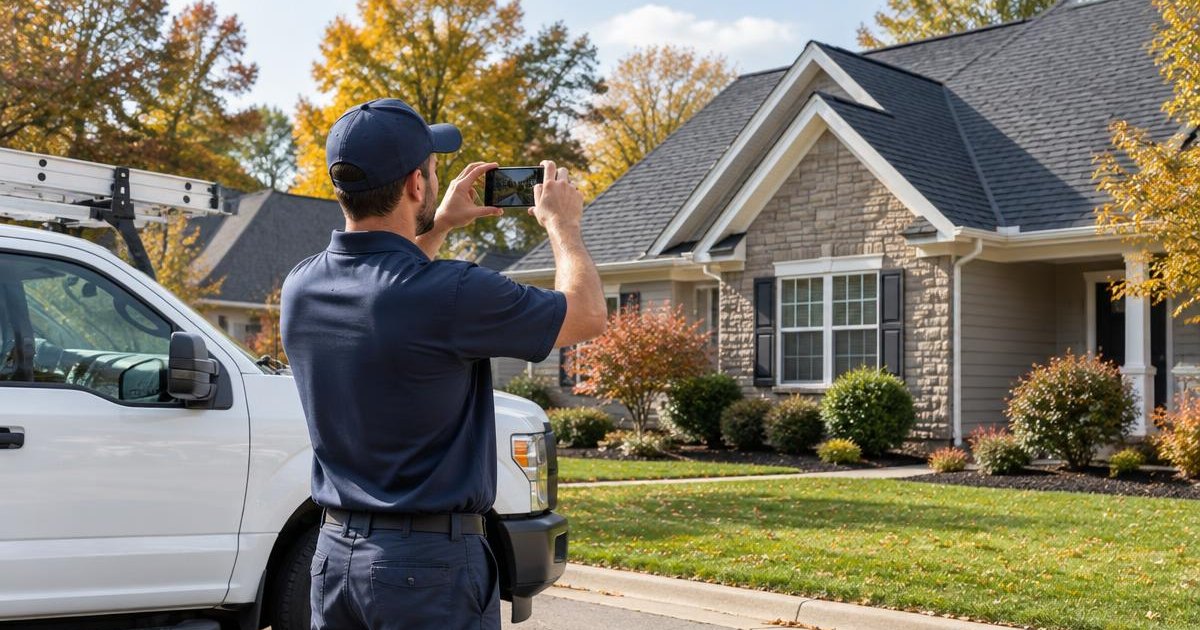
A short phone video or a set of photos from a real job. Before, during, after. "Here's what we found under this roof in Wyoming, Michigan." Homeowners love seeing what's behind the walls and under the shingles.
Real photos beat stock photos every time. If you need ideas for what to shoot, our guide on proving you're local with job site photos covers it.
2. The seasonal check
HVAC companies: furnace tune-ups before the first cold snap. Roofers: storm damage inspections after a hail week. Tree services: storm cleanup and winter pruning. Plumbers: frozen pipe prevention. Timing beats cleverness.
3. The review ad
A real customer review on a clean image, or better, a 20-second video of the homeowner talking. Your Google reviews are already doing the selling. Put them where people scroll. Our reviews flywheel guide shows how to keep fresh ones coming in.
4. The owner on camera
You, in your truck or on a job, talking for 30 seconds. Who you are, what you do, what you'd tell your own mom. It feels uncomfortable. It works. Homeowners hire people, not logos.
Instant forms vs sending people to your website
Facebook gives you two main paths:
•Instant forms (lead ads). The form opens inside Facebook, already filled in with the person's name and contact info. Easy for them. Easy to get junk leads too.
•Website clicks. The ad sends people to a page on your site. Fewer leads, but people who fill out a form on your site usually mean it.
If you use instant forms, slow them down a little. PPC Hero's walkthrough of Meta instant forms explains the "Higher intent" form type, which adds a review step so people confirm their info before submitting. You can ask up to 15 questions, but every question adds friction. One or two qualifying questions is the sweet spot:
•"Do you own the home?"
•"What do you need help with?" (repair, replacement, inspection)
•"When are you hoping to get this done?"
If you send people to your site, send them to a page built for that offer, not your homepage. A furnace tune-up ad should land on a furnace tune-up page with a phone number at the top and a short form. If your site is slow or confusing, Facebook will happily take your money and send people to a page they leave. Read why your website isn't delivering leads before you run traffic to it.
Speed-to-lead is everything on Facebook
This is where most contractors lose. A Facebook lead was scrolling past puppy videos 30 seconds ago. If you call them back tomorrow, they won't remember filling out the form.
•Call within five minutes if you can. Text right away if you can't.
•Connect your form to your CRM so leads don't sit in a Facebook inbox nobody checks.
•Use an automatic text that confirms you got their request and says when you'll call.
•Follow up more than once. Many homeowners need several touches.
If your team can't answer fast, an AI voice or chat agent can respond instantly and book the appointment. We compared the options in AI receptionist vs answering service.
The mistakes that waste a contractor's ad budget
•Boosting posts and calling it advertising. The boost button is fine for getting a post seen. It is not a lead system.
•Stock photos. Homeowners can spot them instantly.
•No offer. "Call us for all your roofing needs" gives nobody a reason to act. "Free storm damage inspection this week in Kentwood" does.
•Changing everything every three days. Give an ad at least a week or two and enough budget to learn before you judge it.
•Not tracking booked jobs. If you can't tie leads to jobs, you're guessing.
•Running ads with an empty or dead Facebook page. People click your name before they call. Give them something to see. Our piece on the three jobs your social feed has explains what that page needs to do.
How to tell if it's working
Check these every month:
1.Leads. How many came in?
2.Contact rate. How many did you actually talk to?
3.Appointments set. How many turned into an estimate or a visit?
4.Jobs sold. How many signed?
5.Cost per sold job. Total ad spend divided by jobs sold.
If leads are high but contact rate is low, your follow-up is the problem, not the ads. If you talk to people but nobody books, look at your offer and who's answering the phone. If nobody clicks, change the creative.
FAQs
Do Facebook ads work for contractors?
Yes, when they're set up as a lead system. Facebook reaches homeowners before they start searching, so leads need fast follow-up. Contractors who call back within minutes and track booked jobs usually get the best results.
How much should a contractor spend on Facebook ads?
Start with a budget you can run for at least a month without panicking, so the ads have time to learn. WordStream's 2025 benchmarks put the median home improvement lead at $41.26, so plan your budget around how many leads you need to land one job.
Can I target homeowners by zip code on Facebook?
Often, no. If Meta puts your ad in the housing or credit special ad category, zip code targeting isn't allowed and any location must include at least a 15-mile radius. Let your ad's photos and message attract the right homeowners.
Are Facebook lead forms or website clicks better for contractors?
Instant forms bring more leads, but more of them are low quality. Website clicks bring fewer leads with more intent. Many contractors start with instant forms using the "Higher intent" option and one or two qualifying questions.
Should I boost posts or run real Facebook ads?
Run real campaigns in Ads Manager when you want leads. Boosting a post can get more people to see it, but it gives you less control over the goal, the form, and the tracking.
The bottom line
Facebook ads won't replace Google, your website, or your reviews. They put your name in front of homeowners before they're ready to call anyone, so when they are, you're the one they remember. Real photos, a clear offer, a short form, and a phone call within minutes. That's the whole system. Most contractors skip the last part. Don't.
Want Facebook and Instagram working for your business instead of just costing you money? Resonating Brands builds social media programs for home service contractors that tie your ads to your website, your reviews, and your follow-up. Let's talk about your business.
Sources
•WordStream, "Facebook Ads Benchmarks 2025"
•Jon Loomer, "Special Ad Categories: A Guide for Meta Ads"
•Webtonic, "Meta Ad Rejected for a Special Ad Category You Are Not In"
•PPC Hero, "A Walkthrough Guide to Meta Instant Form Ads"
Janette O'Shaughnessy is the founder of Resonating Brands, a boutique digital marketing agency based in West Michigan that specializes in next generation websites, voice agents, and lead generation systems for home service contractors.