By Janette O'Shaughnessy | Resonating Brands
Most roofing websites are five pages of nothing. Home, About, Services, Gallery, Contact. A logo, a stock photo of a guy on a ladder, and a phone number nobody answers fast enough. Then the owner wonders why the phone is quiet.
Here is the truth. In 2026, your website is not a brochure. It is the salesperson who works while you sleep, and the thing Google and ChatGPT read before they decide whether to recommend you. If the pages are not there, you are not in the conversation. This is for roofers who are tired of being invisible. Here is exactly what your site needs to have.
Start with the page that answers the homeowner's question
A homeowner does not wake up wanting a "roofing company." They wake up to a stain on the ceiling, a missing shingle in the yard, or a letter from their insurance company. They have a problem and a question. Your job is to be the page that answers it.
That is the shift happening right now. People are not just typing into Google anymore. They are asking ChatGPT, Gemini, and Perplexity "who is the best roofer near me" and "should I repair or replace my roof." Over 60% of searches now involve some kind of AI answer. When a homeowner asks one of those tools who to call, somebody gets named. Right now in your service area, it is probably not you. The pages below are how we fix that.
This is the work of SEO, AEO, and GEO together. Search Engine Optimization gets you ranked. Answer Engine Optimization gets you named inside AI chat answers. Generative Engine Optimization gets you cited in Google's AI Overviews. You do not pick one. The roofers winning in 2026 show up in all three, and they do it with the right pages built the right way.
The homepage: proof in the first five seconds
Your homepage is not where you tell people you are "family owned and committed to quality." Every roofer says that. It means nothing.
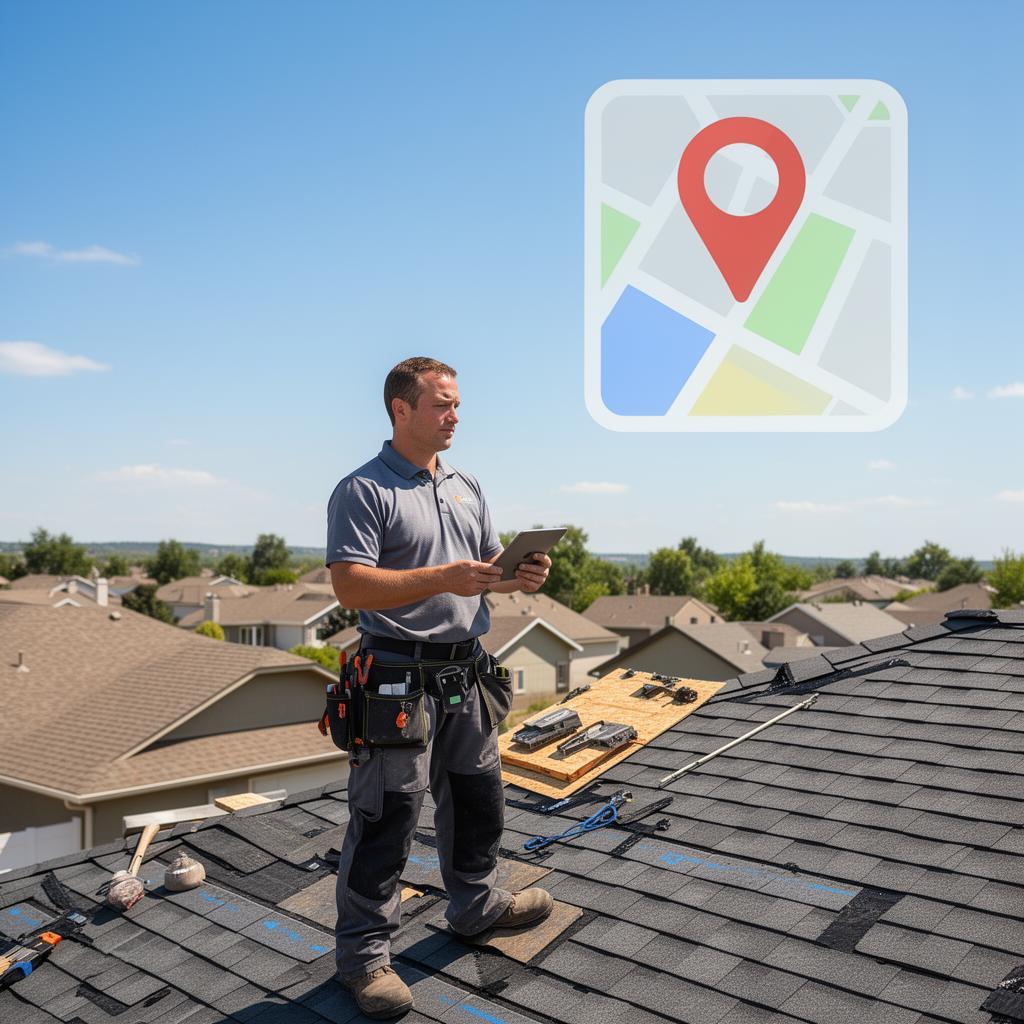
Your homepage has one job: prove in five seconds that you are the obvious choice. That means your real review count and star rating up top. The cities you serve, in plain text. A photo of your actual crew on an actual roof, not a stock photo. One clear call to action: book a free inspection. And your phone number wired to track every call so you know what is working.
Google rewards proof, not promises. So does the homeowner skimming on their phone in the driveway.
Individual service pages — one per service, not one page for all of them
This is where most roofers leave money on the table. They cram asphalt shingles, metal roofing, flat roofs, repairs, and gutters onto a single "Services" page and call it done.
That tells Google nothing. It tells an AI engine nothing. And it ranks for nothing.
You need a dedicated page for every service you offer. Asphalt shingle roof replacement. Metal roofing. Flat and low-slope roofing. Roof repair. Storm and hail damage repair. Gutters. Each one deep, specific, and written for a human — what the service is, who it is for, what it costs to think about, how long it takes, what makes your version of it better. This is how you build topical authority, which is the thing that tells search engines you are a real expert and not a guy with a website. Depth wins. A thin page never ranked for anything worth having.
Service area pages — one for every city you actually serve
A roofer in Holland does not compete in Grand Rapids on the same page. You serve a radius, and Google ranks locally. One generic homepage will not carry every town.
So you build a page for each city and neighborhood you work in. Real local content — the neighborhoods, the common roof types, the weather that beats them up, jobs you have done nearby, reviews from those actual customers. Not the same paragraph with the town name swapped out. Google sees through that, and so do homeowners.
Done right, these pages are why you show up when someone three towns over searches "roof replacement near me." Done lazy, they do nothing. Put in the work here. It pays for years.
The storm and insurance page — because that is where the money is
Insurance-driven work is surging, and most roofing sites barely mention it. That is a gift to whoever builds the page first.
A homeowner who just got hit by hail is scared and confused. They do not know if they have a claim. They do not know what to say to the adjuster. Build the page that walks them through it: what storm damage looks like, how the claims process works, how you help, and what happens after they call. Be the calm expert. The roofer who explains the process gets the inspection. The one who hides it loses the job to someone who looked more trustworthy.
The pages that close the deal: reviews, gallery, financing
These three are not optional anymore. They are how a stranger decides to trust you with a five-figure project.
A reviews and testimonials page that pulls your real Google reviews into one place. People check reviews before they call — make them easy to find. A project gallery with real before-and-after photos of your work, updated regularly, because stale galleries hurt your credibility and your rankings both. And a financing page, because a new roof is one of the biggest surprise expenses a family faces, and "we offer financing" turns a maybe into a yes. Spell out the options. Remove the sticker shock.
The About page and the FAQ — quiet pages that do loud work
Your About page is where you become a real company instead of a logo. Your licenses, your insurance, how long you have been doing this, the faces of the people who show up. This is also where homeowners go to check if you are legit, so make it easy to confirm you are.
Your FAQ page is secretly one of the most powerful pages you own in 2026. When you answer real questions — "how long does a roof last," "do I need a full replacement or a repair," "how long does the job take" — in clear language, you feed the AI engines exactly what they want. They pull those answers straight into ChatGPT and Google's AI Overviews and credit you as the source. That is AEO and GEO working for you while you are on a roof.
The part you cannot see: schema markup and speed
Two things hold all of this together, and homeowners never see either one.
The first is schema markup. It is code in the background that spells out, in a language machines read instantly, who you are, where you work, what you charge, your reviews, and your service area. Without it, AI engines have to guess. With it, they know — and they recommend the company they understand best. Every page above should have it baked in.
The second is speed. Most searches happen on a phone, and a slow site loses the visitor before the page even loads. Fast, mobile-first, clean — that is not a nice-to-have, it is the price of ranking at all. The same goes for speed-to-lead once they call: the roofer who answers first usually wins the job. Your site should be wired to make that response instant.
This is what a next generation website actually is
A next generation website is not five pages and a prayer. It is a homepage that proves it, a service page for everything you do, a city page for everywhere you work, a storm page where the money is, reviews and a gallery and financing to close, an FAQ that feeds the AI engines, and schema markup under all of it so SEO, AEO, and GEO pull in the same direction.
The roofers showing up at the top — in Google, in AI Overviews, in ChatGPT — are not always the biggest. They are the ones who built the right pages. There has never been a better time to be the company that did the work.
Want to know which of these pages your site is missing? Reach out and we will take a straight look at it together — no pitch deck, no pressure. Just where you are and where you want to be.
Continue Learning: Roofing Marketing Hub · Mobile Website Speed for Roofers · Google Ads vs. SEO for Roofers · Next-Generation Websites That Capture & Convert Leads