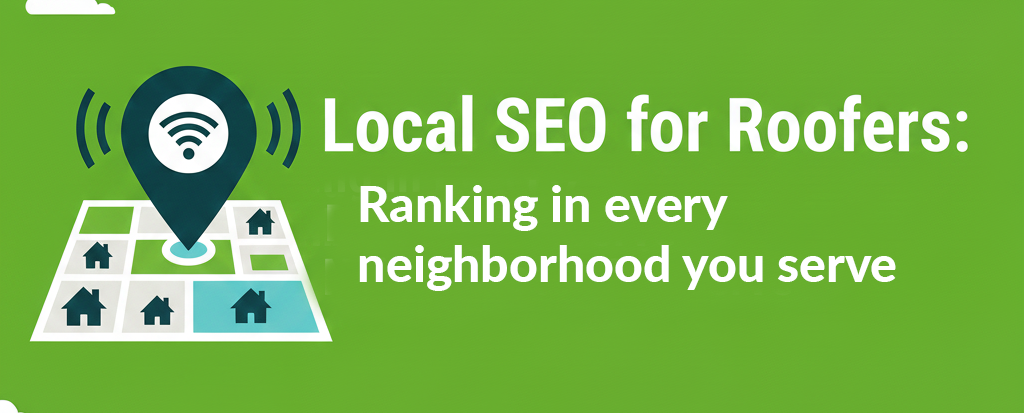
When a homeowner searches for a roofing company, Google Maps results (the local map pack) are often the first thing they see — and frequently the only results they interact with.
Ranking in Google Maps can be one of the most consistent and cost-effective lead sources for a roofing company. But it requires a deliberate strategy.
This guide explains how Google Maps rankings work for roofers and what you can do to improve your position.
How Google Maps Rankings Work
Google determines local map pack rankings based on three primary factors:
Relevance
How well your business matches the search query. This is influenced by:
•Your primary and secondary business categories
•Keywords in your business description
•Services and products listed in your profile
•Content on your website
Distance
How close your business is to the searcher or the location specified in the search. You cannot control where your business is located, but you can optimize for multiple service areas.
Prominence
How well-known and trusted your business appears online. This includes:
•Review count and rating
•How often your business is mentioned online
•Backlinks and citations
•Website authority
Google Business Profile Optimization for Roofers
Your Google Business Profile is the foundation of Google Maps visibility.
Complete Every Section
•Business name (exact legal name — no keyword stuffing)
•Address or service area
•Phone number
•Website URL
•Business hours
•Business description with relevant keywords
•Primary category: Roofing Contractor
•Secondary categories: Roof Repair Service, Roofing Service, etc.
Add Services and Products
List every service you offer:
•Roof replacement
•Roof repair
•Storm damage restoration
•Emergency roofing
•Gutter installation
•Roof inspections
•Commercial roofing
Post Regularly
Google Business Profile posts show activity and relevance:
•Share completed projects with before-and-after photos
•Post seasonal tips (storm preparation, winter maintenance)
•Announce promotions or community involvement
•Share blog content from your website
Upload Quality Photos
•Completed roofing projects
•Your team at work
•Branded trucks and equipment
•Before-and-after comparisons
Google reports that businesses with photos receive 42% more direction requests and 35% more website clicks.
Reviews: The Most Important Ranking Factor You Control
Review count and quality heavily influence Google Maps rankings.
How to Generate More Reviews
•Ask every customer after project completion
•Use automated review request sequences
•Make it easy with direct links to your Google review page
•Respond to every review — positive and negative
Review Best Practices
•Never buy or fake reviews (Google penalizes this)
•Respond professionally to negative reviews
•Include relevant project details in responses (this adds keyword-rich content to your profile)
For detailed review strategies, see our review generation guide.
Citations and Directory Listings
Citations are mentions of your business name, address, and phone number (NAP) across the web.
Important directories for roofers:
•Yelp
•BBB
•HomeAdvisor / Angi
•Facebook Business
•Apple Maps
•Bing Places
•Industry-specific directories
Consistency is critical. Your NAP information must be identical across every listing.
Website Optimization for Map Rankings
Your website supports your Google Maps rankings:
•Create dedicated service area pages for each city you serve
•Include your NAP on every page (typically in the footer)
•Use schema markup (LocalBusiness) for structured data
•Publish locally relevant content
•Ensure fast load times and mobile optimization
For comprehensive website strategies, see our local SEO guide.
Common Mistakes That Hurt Google Maps Rankings
•Keyword stuffing in the business name
•Inconsistent NAP across directories
•Ignoring reviews or not responding to them
•Thin or missing website content for service areas
•No photos or outdated photos
•Inactive profile with no posts or updates
How Long Does It Take to Rank in Google Maps?
Results vary by market competition, but most roofing companies see improvement within 2–4 months of consistent optimization. Highly competitive markets may take 6–12 months.
The key is consistency: keep generating reviews, posting updates, publishing content, and maintaining accurate listings.
How Resonating Brands Helps
At Resonating Brands, we optimize Google Business Profiles and local SEO for roofing companies — helping you rank in the map pack and generate consistent inbound leads from homeowners in your service area.
Book a strategy call to improve your Google Maps visibility.
Continue Learning: Roofing Marketing Hub · Local SEO Guide for Roofers · Roofing SEO Mistakes · Review Generation Guide · Roofing Marketing Strategies · Websites for Roofers